South Asia’s Supply Chain Shift: Opportunities and Risks for Businesses
Global supply chains are being redrawn, and South Asia is moving closer to the center of the map. Rising costs in China, geopolitical tension, new trade rules, and demand for backup production bases have pushed companies to look beyond familiar manufacturing hubs.
For businesses, this shift brings a real opening. India, Bangladesh, Sri Lanka, Pakistan, Nepal, and other economies in the region offer large labor pools, strategic shipping routes, growing consumer markets, and improving industrial capacity. Still, the opportunity is not simple. Infrastructure gaps, policy uncertainty, climate exposure, and compliance risks can quickly turn a low-cost plan into a costly mistake.

Why South Asia is gaining attention
The old model of concentrating production in one country made sense when efficiency mattered more than resilience. That model now looks fragile. Pandemic disruptions, port congestion, tariff disputes, and regional conflicts showed how quickly a single bottleneck can affect global production.
South Asia is benefiting from this rethink for several reasons.
India has become more attractive for electronics, pharmaceuticals, chemicals, automotive parts, and renewable energy components. Its large domestic market gives manufacturers a second reason to be there, beyond exports.
Bangladesh remains a major apparel producer and continues to draw interest from companies seeking scale in garments, textiles, and related services. Sri Lanka has strengths in logistics, ports, apparel, rubber products, and niche manufacturing. Pakistan offers potential in textiles, agriculture-linked processing, sports goods, and light manufacturing.
The region also sits near key sea lanes that connect the Middle East, East Asia, Africa, and Europe. For companies that need both production capacity and access to growing markets, South Asia is not just a backup choice. It can become part of a broader supply network.
That is the core reason behind South Asia’s supply chain shift: companies want lower risk, not just lower cost.
The biggest opportunities for businesses
The supply chain reset creates openings across manufacturing, services, logistics, and sourcing. Some opportunities are already visible, while others will grow as infrastructure and policy support improve.
Manufacturing diversification is the most direct opportunity. Companies that once relied heavily on a single production base can split orders across South Asia. This reduces exposure to factory shutdowns, tariffs, port delays, and local political risk.
Near-market production is another advantage. South Asia’s large and young population is creating demand for consumer goods, health products, packaged foods, vehicles, appliances, and digital services. Manufacturers can serve export markets while also selling into regional markets.
Supplier development also has room to grow. As global buyers enter the region, demand rises for packaging, components, testing labs, warehousing, maintenance, transport, and quality control services. Local firms that meet international standards can move from small contractors to long-term partners.
Digital and professional services add another layer. India’s technology base is well known, but the wider region also supports back-office operations, finance support, design services, customer operations, and supply chain data work.

For small and midsize companies, the most practical path may not be building a factory. It may mean qualifying a second supplier, opening a regional sourcing office, or working with logistics partners that already understand customs and local transport.
The risks that cannot be ignored
South Asia’s promise comes with constraints. Businesses that treat the region as a simple low-cost alternative may run into delays, quality issues, or compliance problems.
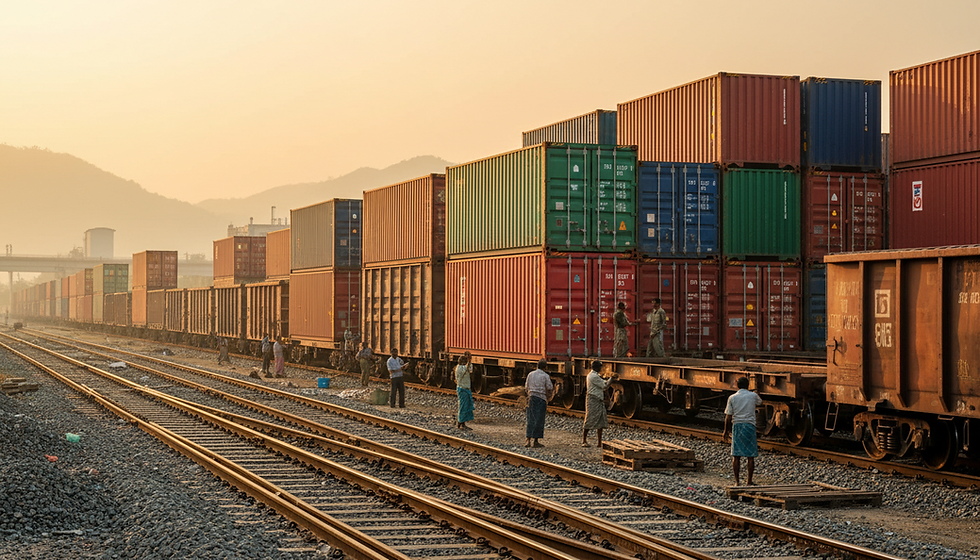
Infrastructure remains uneven. Major ports, highways, rail links, and industrial parks are improving, but gaps still affect lead times. A factory may produce on schedule, then lose days to inland transport delays or customs paperwork.
Policy can also change. Import duties, local content rules, tax treatment, and export incentives vary by country and sometimes shift with political priorities. Companies need local advice and flexible contracts rather than assuming rules will stay fixed.
Compliance is another serious issue. Global buyers face growing pressure to prove that suppliers meet labor, safety, environmental, and traceability standards. A weak audit process can damage customer trust and create legal or reputational risk.
Climate risk matters as well. Flooding, heat waves, cyclones, and water stress can disrupt ports, farms, factories, and transport routes. Businesses need to assess exposure by location, not only by country.
Currency movements and financing costs can also affect margins. A sourcing plan that looks attractive at the start of the year may look different if exchange rates shift or local credit tightens.

How companies can build a smarter regional plan
A strong South Asia strategy usually starts small and becomes more detailed over time. The goal is to learn the market before depending on it.
Start with a clear map of the supply chain. Identify which inputs, suppliers, factories, warehouses, ports, and transport routes carry the most risk. Then decide what role South Asia should play. It may serve as a second source, a regional assembly base, a full manufacturing hub, or a market entry point.
Next, compare countries by product category rather than broad reputation. A country that works well for apparel may not be the best fit for electronics. A location with strong port access may still lack skilled suppliers for a specialized component.
Businesses should also test suppliers before scaling. Pilot orders can reveal quality, communication, documentation, and lead-time issues. Site visits, third-party inspections, and worker safety checks help confirm that a supplier can meet standards.
Good contracts matter, but relationships matter too. Local partners can help with permits, customs, hiring, transport, and cultural expectations. The best partners explain risks early rather than simply promising speed.
A practical readiness checklist includes:
Confirm product quality standards before placing large orders
Review labor, safety, and environmental practices
Test shipping routes and customs timelines
Build backup plans for ports, transport, and key suppliers
Track policy changes in each target country
Protect intellectual property with clear agreements
Plan for climate-related disruption by site and season

The takeaway for business leaders
South Asia is not a single market and not a simple replacement for existing supply chains. It is a region with different strengths, risks, rules, and levels of readiness. That complexity is exactly why early planning matters.
The best opportunities will go to businesses that treat supply chain restructuring as a long-term design choice rather than a quick sourcing switch. Lower costs may open the door, but resilience, compliance, infrastructure, and local knowledge will decide whether the strategy works.
South Asia’s role in global supply chains is likely to grow. Companies that learn the region carefully, build trusted partners, and plan for disruption will be better placed to benefit from the shift.


Comments