Terrorism and Border Security in South Asia The Struggle for Stability
South Asia lives with a hard security paradox. The region needs open trade, movement, and cultural exchange to grow, yet some of its most dangerous threats move through the same roads, rivers, mountain passes, and coastlines that connect its people.
Terrorism and border security in South Asia cannot be understood as a narrow policing issue. It is tied to history, geography, identity, poverty, migration, great-power competition, and weak governance in fragile border areas. When borders become zones of suspicion instead of contact, communities suffer first. When they become too porous for armed groups, entire states feel the pressure.
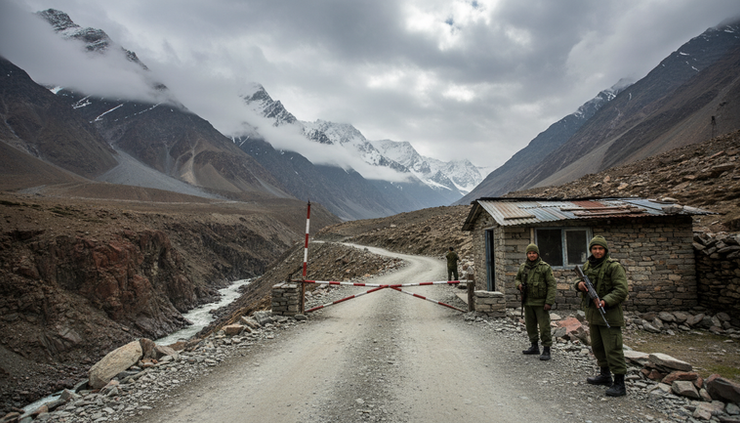
South Asia’s geography makes border security unusually complex
Few regions combine such dense populations with such difficult terrain. South Asia has Himalayan passes, desert frontiers, riverine borders, coastal routes, and crowded land crossings. Some borders cut through villages, farms, ethnic communities, and old trade routes. That makes control difficult even when governments invest heavily in fences, patrols, and surveillance.
The India-Pakistan border remains one of the world’s most sensitive frontiers, shaped by partition, wars, and the unresolved dispute over Kashmir. The Afghanistan-Pakistan border has long been difficult to monitor because of rugged terrain and cross-border tribal ties. Bangladesh, India, and Myanmar face pressures linked to migration, smuggling, insurgency, and humanitarian displacement. Sri Lanka and the Maldives also remind the region that maritime security matters, especially when movement by sea can bypass land controls.
Border security in this setting is not just about stopping people. It also involves tracking weapons, counterfeit documents, illegal financing, narcotics, and communication networks. Terrorist groups and criminal networks often use the same channels. A smuggling route that carries contraband one month can help move explosives, cash, or operatives the next.
The challenge grows when people living near borders do not trust the state. Heavy-handed security can alienate communities. Weak security can leave them exposed to coercion by armed groups. Stable border management has to do both at once: protect the state and protect the people who live at the edge of it.
Terrorism feeds on unresolved conflicts and weak governance
Terrorism in South Asia has taken many forms. Some groups claim religious motives. Others grow out of separatist movements, ethnic grievances, or ideological extremism. The region has seen attacks on civilians, security forces, religious sites, markets, schools, and public transport. These attacks aim to create fear, provoke retaliation, and weaken trust in government.
Long-running conflicts create space for extremist groups to recruit and survive. When people see no fair path to justice, employment, or political voice, violent groups may try to present themselves as protectors or alternatives. That does not excuse terrorism. It explains why force alone rarely ends it.
Weak governance also matters. Remote districts often lack reliable courts, schools, health care, roads, and jobs. In such places, illegal groups may offer money, protection, or identity. Once they gain influence, they become harder to remove.
There is also a regional dimension. South Asian states often accuse each other of tolerating or supporting militant groups. These claims deepen mistrust and make cooperation harder. Even when governments share an interest in stopping violence, political tensions can block intelligence sharing and joint action.

Strong borders require more than fences and patrols
Fences, watchtowers, drones, cameras, and biometric systems can help. They can slow illegal crossings and improve response time. But technology cannot replace human intelligence, community trust, and effective institutions.
A border post may detect movement, but local residents often know which paths are used, which strangers have arrived, and which groups are applying pressure. If those residents fear harassment, corruption, or collective punishment, they may stay silent. If they trust local authorities, they become a powerful early warning system.
A useful border strategy has several layers:
Clear legal crossings
People are more likely to use official routes when those routes are safe, affordable, and predictable.
Trained border forces
Guards need language skills, local knowledge, and clear rules on the use of force.
Shared intelligence
Terror networks do not respect borders, so agencies cannot work in isolation.
Financial tracking
Small flows of money can sustain violent groups. Banks, mobile payment systems, and regulators all matter.
Community protection
Border residents should not be treated as suspects by default.
The best systems reduce illegal movement without crushing legitimate trade and travel. That balance is hard, but it is essential. A closed border can damage local economies and increase resentment. A poorly managed border can invite violence.
Regional cooperation remains the missing piece
South Asia has the tools to reduce cross-border terrorism, but political distrust often blocks progress. Intelligence agencies may hesitate to share information. Police forces may lack common procedures. Diplomats may suspend talks after attacks, which can make future prevention harder.
Cooperation does not require full agreement on every dispute. States can start with narrow, practical steps. They can share watch lists through agreed channels, coordinate on forged documents, build hotlines between border commanders, and improve disaster and refugee management. They can also work through regional and international forums when bilateral ties are strained.
Trade can support security too. Legal commerce gives border communities a stake in stability. When farmers, transport workers, shopkeepers, and traders benefit from peace, they are less likely to tolerate groups that threaten it. Economic connection is not a cure for extremism, but it can reduce the space in which extremism grows.

Stability depends on justice as much as security
A durable response to terrorism must combine security with fairness. States have a duty to prevent attacks and protect citizens. They also have a duty to respect rights, apply the law evenly, and avoid punishing entire communities for the actions of a few.
Abusive tactics can create short-term fear, but they often produce long-term instability. Arbitrary detention, discrimination, and excessive force can become recruitment tools for extremist groups. By contrast, credible courts, accountable policing, and transparent investigations help weaken extremist narratives.
Education and employment matter as well. Young people need reasons to believe that peaceful civic life can offer dignity and opportunity. Religious leaders, teachers, civil society groups, and local officials can help counter violent propaganda when they have credibility in their communities.
The digital space adds another layer. Extremist messaging can cross borders instantly. Governments need to monitor threats online, but broad censorship can harm free expression and push networks into harder-to-track spaces. A smarter approach focuses on specific incitement, recruitment, and financing while supporting credible community voices.

The path forward is practical and patient
South Asia’s struggle for stability will not be solved by a single treaty, fence, or military operation. The region needs patient work across borders and within them. That means better intelligence, cleaner policing, stronger courts, safer legal crossings, and serious investment in border communities.
The central lesson is simple: security and stability cannot be separated. A state that secures its borders but neglects justice will face resentment. A state that speaks of peace but ignores militant networks will face violence. Lasting stability comes when governments protect people, respect rights, and cooperate even when politics are tense.
For South Asia, the border is not only a line on a map. It is where the region’s fears and hopes meet. Getting border security right is one of the clearest paths toward a safer future.


Comments